
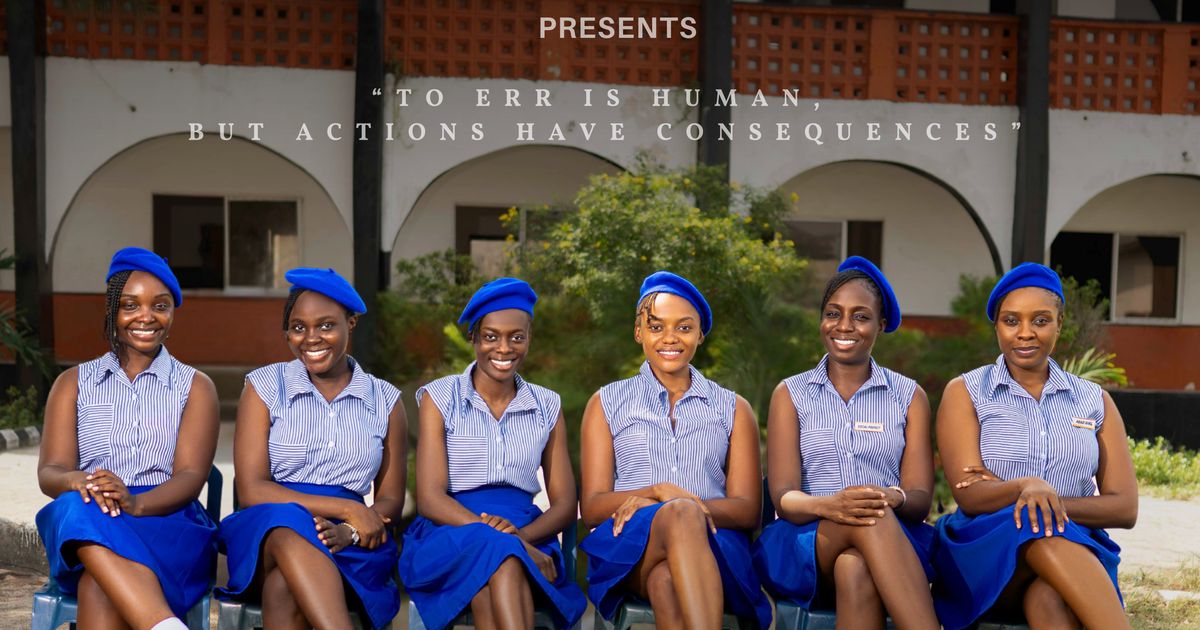
Review of Bolu Essien’s Girls’ Hostel explores secondary school power dynamics, bullying and rivalry
 Girls’ Hostel by Bolu Essien is a gritty and realistic drama series that takes a close look at the social hierarchy and power struggles within secondary school life. The story centres on Ufuoma, a new student who arrives under heavy suspicion after two students from her former school fall into a coma, making her reputation questionable even before she properly settles into her new environment. Her situation is worsened by police involvement and the seizure of her passport, creating a tense atmosphere around her character from the start.
At her new school, she encounters Lara, a dominant “IT girl” who already controls the social order among students and is not willing to share or lose influence. Their rivalry begins almost immediately, with a seemingly simple dance battle acting as a symbolic turning point where Ufuoma unexpectedly wins, shaking Lara’s authority. The series uses such school activities as a backdrop to explore deeper issues of control, insecurity, and competition.
Lara is portrayed as complex rather than purely villainous. While she can be manipulative and territorial, the series also shows her vulnerability and insecurity, making her a more human and unsettling character. Her need to maintain dominance reflects broader real-life behaviours seen in schools and even adult environments.
Ufuoma’s character, however, is presented as more emotionally restrained but sometimes inconsistent, especially in how she handles suspicion and danger around her. This creates some narrative gaps, though the show still maintains engagement through its subplots.
Overall, the series highlights bullying, shifting alliances, friendship breakdowns, and emotional pressure within teenage environments. It shows how insecurity can fuel harmful behaviour and how early social experiences can shape individuals long into adulthood. The show is simple in structure but strong in emotional realism, making it a reflective piece on youth and social power struggles.