
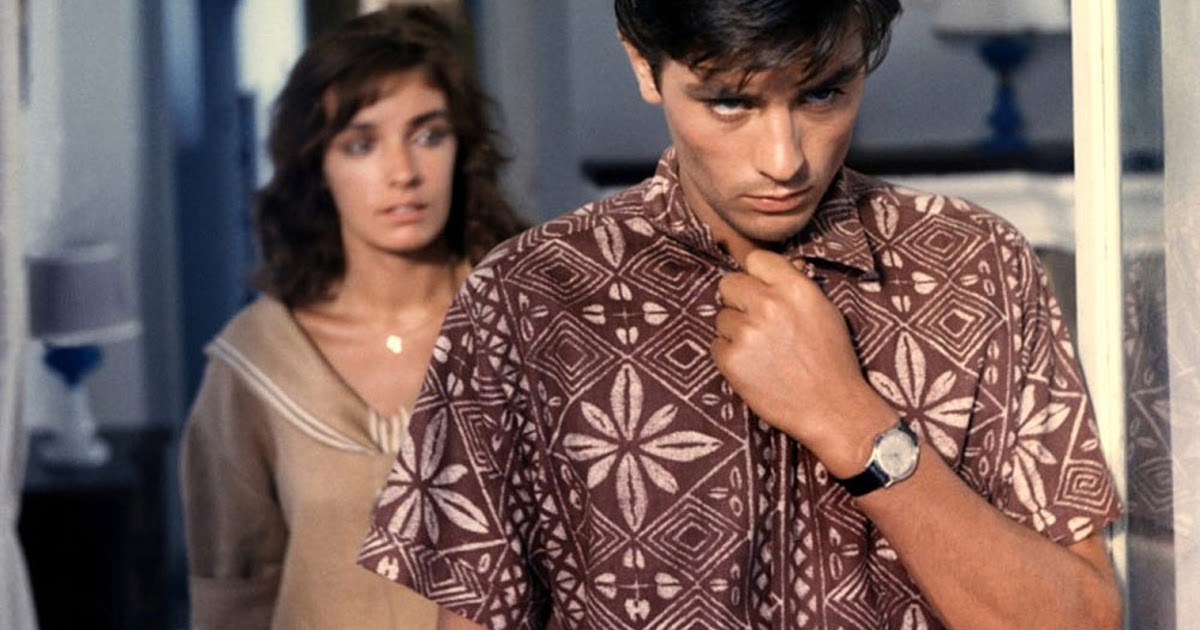
Alain Delon’s Breakthrough Role in ‘Purple Noon’ (1960) Captured in Rare On-Set Photos
The article discusses rare photographs capturing Alain Delon during the filming of the 1960 psychological thriller ‘Purple Noon’ (Plein Soleil). At just 24 years old, Delon secured his breakthrough role as Tom Ripley, a morally ambiguous con artist, after convincing director René Clément to switch him from the originally cast role of Philippe Greenleaf. The production faced tight budget constraints, requiring the crew to film in active, uncontrolled settings. For instance, a marketplace scene was shot in a live market square without shutting it down, with Delon interacting naturally with real vendors during a single take. Delon’s on-set style, characterized by summer-weight tailoring and casually open white shirts, epitomized the casual elegance of the 1960s European cinema scene. His performance contrasted strikingly with his angelic appearance, bringing a chilling, calculating presence to the role. The film also featured notable co-stars including Maurice Ronet, Marie Laforêt, and a brief cameo by his then-partner Romy Schneider. These images and the behind-the-scenes details highlight Delon’s early career transformation into a global cinematic icon, reshaping his trajectory and defining the screen cool of the era. The article emphasizes Delon’s intuitive decision-making and his ability to secure a role that would become synonymous with his career, demonstrating his early understanding of character depth and cinematic impact. The production’s resourcefulness in filming under budget limitations also underscores the creative problem-solving typical of 1960s filmmaking. Delon’s performance in ‘Purple Noon’ is widely regarded as a pivotal moment in his career, establishing him as a leading figure in European cinema and influencing his subsequent roles as antiheroes. The article provides a glimpse into the collaborative environment of the film’s production, showcasing Delon’s professionalism and the era’s cinematic aesthetics. These photographs serve as a historical record of Delon’s emergence as a star and the cultural context of 1960s European cinema.